
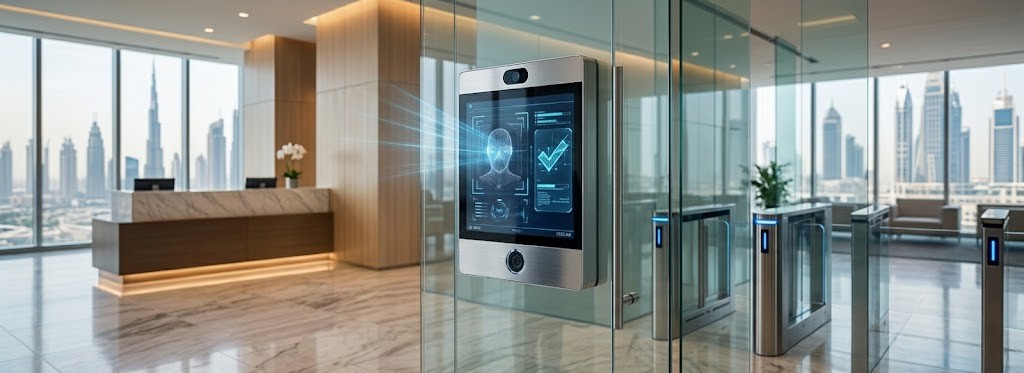
Walk into almost any commercial building in Dubai right now and you’ll find a biometric terminal at the entrance. What’s changed is which kind. Two years ago, fingerprints were the default. In 2026, that conversation has shifted — and not just because of hygiene concerns left over from the pandemic era.
Dubai businesses are actively upgrading attendance infrastructure. The reasons range from WPS compliance requirements and Ministry of Human Resources audit pressure to genuine frustration with fingerprint systems that fail on dusty job sites or reject workers with worn fingertips. Face recognition has matured fast. But my fingerprint hasn’t gone anywhere either.
Here’s what’s actually driving the decision — and what Proswift sees UAE businesses choosing on the ground in 2026.
Quick Answer — Face Recognition vs Fingerprint Attendance
Face recognition attendance systems offer contactless, faster throughput and work regardless of hand condition — making them the preferred choice for offices, hospitality, and healthcare in Dubai. Fingerprint systems remain the more cost-effective option for smaller deployments and environments where facial recognition accuracy is compromised by PPE or poor lighting. Most UAE businesses in 2026 are choosing face recognition for new installations, while retaining fingerprints as a backup or secondary verification method.
Why This Decision Matters More Than Most Businesses Realise
Time and attendance isn’t just an HR function anymore. Under UAE labour law and WPS (Wage Protection System) requirements, accurate attendance records directly affect payroll processing, overtime compliance, and Ministry of Human Resources audits. A system that produces unreliable punch data — whether due to failed fingerprint reads or a face recognition terminal struggling with lighting — creates downstream problems that end up on a finance manager’s desk, not just an HR spreadsheet.
Most people think about biometric attendance in terms of convenience. The smarter question is: which system produces the cleanest, most defensible attendance data for your specific workforce and environment?
How Each Technology Actually Works
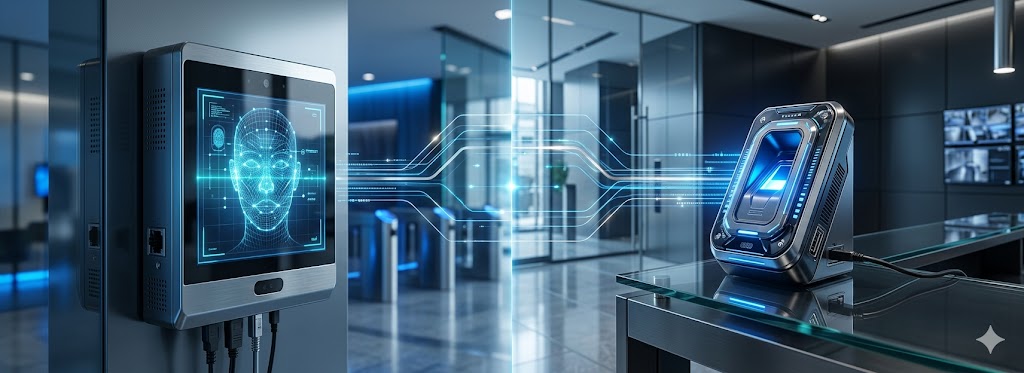
Fingerprint Attendance Systems
Fingerprint readers capture a digital template of ridge patterns from one or more fingers and match them against a stored database. Modern systems — including ZKTeco’s capacitive fingerprint sensors — process verification in under a second with databases of 10,000+ users. The technology is proven, affordable, and well-understood.
The limitation is physical: fingerprint readers fail when hands are wet, dirty, or damaged. In construction, manufacturing, or food processing environments across Dubai and Jebel Ali Free Zone, this is a daily operational reality. Workers with worn or calloused fingertips — common in manual labour roles — register false rejections at rates that make the system functionally unreliable.
Face Recognition Attendance Systems
Face recognition terminals capture a live image of the face, map biometric facial landmarks, and match against stored templates — all in under 0.5 seconds on current-generation hardware like ZKTeco’s SpeedFace series or Hikvision’s MinMoe terminals. The process is entirely contactless. No touching the device. No queue forming because someone’s hand is wet.
The 2026 generation of face recognition hardware has largely solved the problems that plagued earlier models: low-light performance, recognition through safety glasses, and rejection rates for workers wearing face masks. These are no longer dealbreakers — though they remain variables worth testing in your specific environment before committing.
Side-by-Side Comparison
| Factor | Face Recognition | Fingerprint |
| Speed per verification | 0.3–0.5 seconds | 0.5–1 second |
| Contactless | Yes | No |
| Works with PPE/masks | Partially (2026 hardware improving) | No issue with masks, fails with gloves |
| Performance in dusty environments | Strong | Poor to moderate |
| Low-light performance | Requires IR illumination | Not affected |
| Hardware cost | Higher | Lower |
| Hygiene | Excellent | Requires surface contact |
| Spoofing resistance | Strong (liveness detection) | Strong (live finger detection) |
| WPS compliance | Yes | Yes |
| Payroll integration | Yes (ZKBioSecurity, iVMS) | Yes |
| Best fit | Offices, hospitality, healthcare | Warehouses, SMEs, budget deployments |
What Dubai Businesses Are Actually Choosing in 2026
This is where the market intelligence matters more than the spec sheet.
Across Proswift’s installations in 2025 and into 2026, the shift toward face recognition has been clear — but it’s not universal, and the pattern is specific.
Corporate offices and co-working spaces in areas like Business Bay, DIFC, and JLT are almost exclusively moving to face recognition for new installations. Contactless throughput at lobby entry points, the clean aesthetic of wall-mounted terminals, and the absence of hygiene concerns make it the obvious choice for professional environments.
Hospitality and retail — hotels, malls, and F&B outlets — are following the same path. High staff turnover means frequent enrolments; face recognition enrolment is faster and requires no training for end users.
Healthcare facilities — clinics, hospitals, and labs — have specific hygiene protocols that make fingerprint systems operationally awkward. Face recognition fits naturally into infection control environments.
Construction sites and labour accommodation — the picture is different here. Face recognition terminals need power, controlled mounting positions, and reasonable lighting. On active construction sites across Dubai South or Al Quoz, fingerprint remains practical for basic attendance capture, often supplemented by mobile attendance apps for remote verification.
Manufacturing and logistics — this is the most nuanced segment. Dusty and oily hands kill fingerprint accuracy. But PPE requirements — safety goggles, hard hats — can affect face recognition performance. The best solution Proswift recommends here is a dual-verification terminal: face recognition as primary, fingerprint as fallback.
The Hygiene Factor — Still Relevant in 2026
Let’s be direct about this. The post-pandemic hygiene argument for contactless attendance has faded from urgent to simply sensible. It’s no longer the primary driver — but it’s a genuine secondary factor, particularly for healthcare, food production, and client-facing environments.
More practically: a fingerprint terminal at a busy entry point in a Dubai summer means a device that accumulates oils, dust, and wear at pace. Maintenance schedules matter more than most IT managers plan for. Face recognition terminals — mounted at eye level, contactless — have a significantly lower surface maintenance requirement over a three-year deployment.
Cost Reality — What the Investment Actually Looks Like in the UAE
Here’s the honest breakdown for UAE buyers in 2026.
A basic fingerprint time attendance terminal (ZKTeco K40 or equivalent) starts from around AED 300–600 per device. A decent face recognition terminal (ZKTeco SpeedFace V5L, Hikvision DS-K1T671MF) runs AED 1,200–2,500 per device, depending on specification and whether it includes access control functionality.
For a 50-person office with two entry points, the hardware cost difference between fingerprint and face recognition is roughly AED 1,500–3,000. Against three years of reliable, contactless, WPS-compliant attendance data — and the avoided cost of fingerprint failure management — that gap closes faster than most finance teams expect.
Software licensing for ZKBioSecurity or iVMS-4200 is similar regardless of terminal type. Installation complexity is slightly higher for face recognition due to mounting height requirements and IR lighting calibration, but not materially so.
Proswift’s Recommendation for Dubai Businesses
For new installations in 2026, face recognition is the right default for most Dubai business environments — offices, retail, hospitality, healthcare, and any client-facing facility. The technology is mature, the hardware is proven, and the operational benefits over a three-year lifecycle outweigh the higher upfront cost.
Fingerprint remains the practical choice for budget-constrained deployments, construction environments, and as a backup verification method in high-PPE workplaces.
The strongest deployments Proswift installs are hybrid: face recognition as primary verification with fingerprint backup on the same terminal — available in ZKTeco’s current SpeedFace Pro series and several Hikvision DS-K1T models. This covers every edge case without compromising throughput.
Need help deciding what’s right for your site? Proswift supplies, installs, and supports ZKTeco and Hikvision time attendance systems across Dubai and the UAE. Get in touch for a site assessment — we’ll tell you exactly what works for your workforce, not just what sells.
Top 10 FAQs — Face Recognition vs Fingerprint Attendance in UAE
Which biometric attendance system is more accurate — face recognition or fingerprint?
Both achieve over 99% accuracy under ideal conditions. In practice, the environment matters more than technology. Face recognition outperforms fingerprints in dusty, oily, or high-humidity environments. Fingerprint outperforms face recognition in very low-light settings without IR illumination.
Are face recognition attendance systems WPS compliant in the UAE?
Yes. Both face recognition and fingerprint attendance systems are WPS compliant when properly configured with MOHRE-compatible payroll export formats. The compliance depends on your software setup, not the biometric method.
Does face recognition work for employees wearing hijab or niqab?
Face recognition terminals identify based on facial landmark mapping — eyes, nose bridge, and facial geometry. Hijab does not affect recognition. Niqab significantly reduces accuracy, and in these cases fingerprint or card-based verification is the appropriate alternative.
Can face recognition attendance systems be fooled with a photo?
Modern terminals include liveness detection — they distinguish between a live face and a photograph or screen image. Current-generation ZKTeco and Hikvision terminals are not susceptible to basic photo spoofing.
How does face recognition attendance handle employees in masks?
2026-generation hardware from ZKTeco SpeedFace series and Hikvision MinMoe handles partial face recognition for mask wearers using upper-face landmark mapping. Performance varies by terminal model — confirm mask recognition capability before purchasing for healthcare or clean-room environments.
What is the best face recognition attendance system for small businesses in Dubai?
For SMEs with under 50 staff, the ZKTeco SpeedFace V5L offers strong value — face recognition, optional fingerprint backup, access control integration, and ZKBioSecurity compatibility at a mid-market price point. Proswift supplies and configures this system across Dubai.
How long does enrolment take for face recognition vs fingerprint?
Face recognition enrolment takes 5–10 seconds per employee with no training required. Fingerprint enrolment typically takes 15–30 seconds (capturing multiple finger templates). For large workforces with high turnover, face recognition reduces HR onboarding time meaningfully.
Do face recognition systems work in outdoor UAE environments?
Outdoor performance depends on direct sunlight management. Most terminals require shade or housing to function reliably — direct UAE summer sunlight can wash out camera sensors. Proswift recommends shaded canopy mounting for any outdoor face recognition installation.
Which attendance system integrates better with UAE payroll software?
ZKTeco’s ZKBioSecurity platform provides the most flexible payroll export options for UAE deployments — compatible with SAP, Oracle, and most regional ERP systems. Hikvision’s iVMS-4200 is strong for security-integrated deployments but requires more configuration for pure payroll workflows.
Is it worth upgrading from fingerprint to face recognition in 2026?
For most Dubai businesses: yes, if your current fingerprint system is generating regular rejection errors or if hygiene and throughput speed are operational concerns. The hardware cost difference has narrowed significantly in 2025–2026, and the operational benefits of contactless verification compound over a three-year deployment cycle.